Trade-offs within Web Search - Good, Fast, Cheap—pick two
To Nha Notes | Dec. 30, 2022, 10:40 a.m.
A simple way to depict the trade-offs is to draw a triangle of tension between Good (Quality), Fast (Latency), and Cheap (Capacity), as illustrated in below figure.
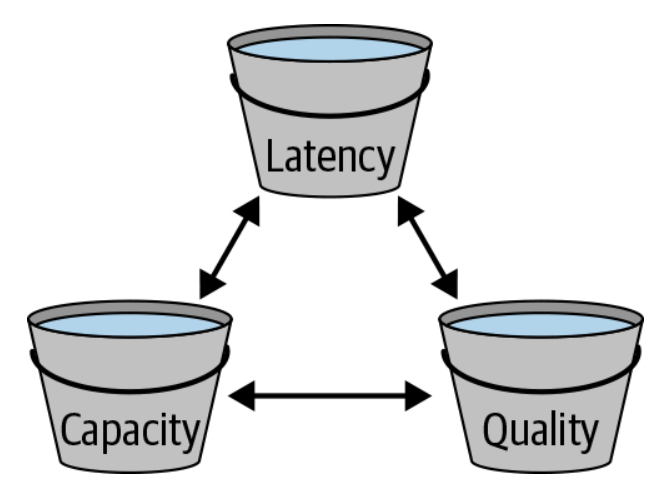
It’s easy to improve any one of these traits by deliberately harming at least one of the other two. For example, you can improve quality by putting more data on the search results page—but doing so will hurt capacity and latency. You can also do a direct trade-off between latency and capacity by changing the traffic load on your serving cluster. If you send more queries to the cluster, you get increased capacity in the sense that you get better utilization of the CPUs—more bang for your hardware buck. But higher load increases resource contention within a computer, making the average latency of a query worse. If you deliberately decrease a cluster’s traffic (run it “cooler”), you have less serving capacity overall, but each query becomes faster.
The main point here is that this insight—a better understanding of all the trade-offs—allowed us to start experimenting with new ways of balancing. Instead of treating latency as an unavoidable and accidental side effect, we could now treat it as a first-class goal along with our other goals. This led to new strategies for us. For example, our data scientists were able to measure exactly how much latency hurt user engagement. This allowed them to construct a metric that pitted quality-driven improvements to short-term user engagement against latency-driven damage to long-term user engagement. This approach allows us to make more data-driven decisions about product changes.
if a small change improves quality but also hurts latency, we can quantitatively decide whether the change is worth launching or not. We are always deciding whether our quality, latency, and capacity changes are in balance, and iterating on our decisions every month.
References
The ebook Software Engineering at Google