Reverse ETL Enables Data Activation
To Nha Notes | July 1, 2023, 11:18 p.m.
What is Reverse ETL?
Reverse ETL is the process of copying data from your central data warehouse to your operational systems and SaaS tools so your business teams can leverage that data to drive action and personalize customer experiences.
What’s the Difference Between ETL and Reverse ETL?
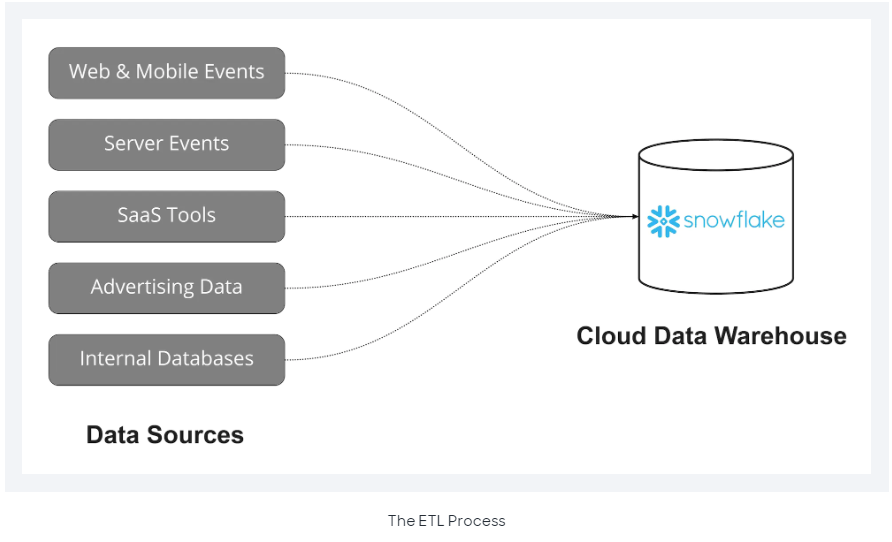
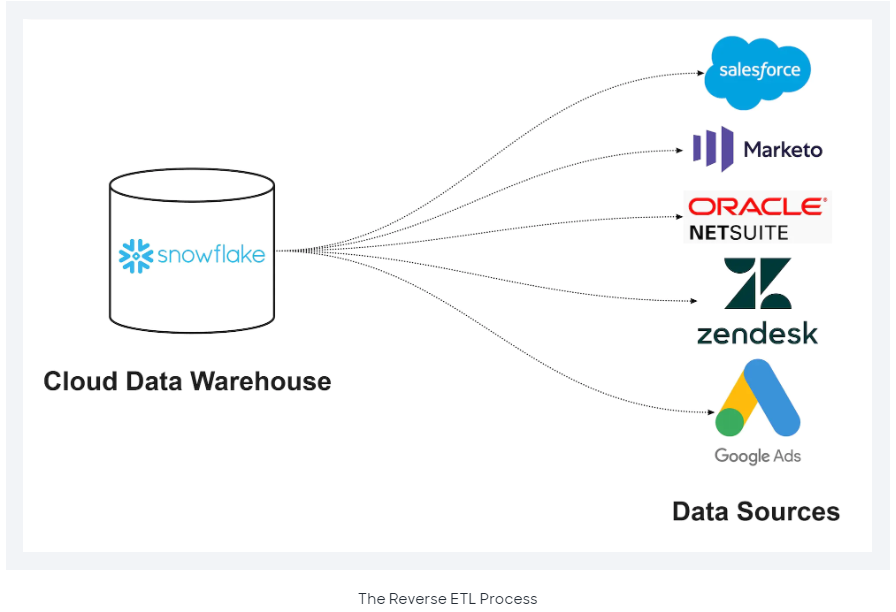
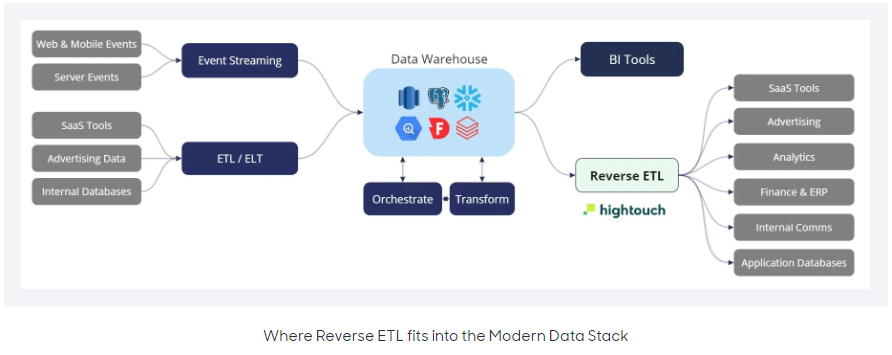
Reverse ETL sits as an additional layer on top of your existing data warehouse, allowing you to access and activate all of your existing data models.
Reverse ETL Enables Data Activation
Although many tools claim to do Data Activation, Reverse ETL is by far the simplest and most efficient solution because it simply acts as an additional layer in the modern data stack. With Reverse ETL, the warehouse acts as the hub and the business tools act as the spokes. Reverse ETL works by reading from the warehouse and writing to the end destination (i.e. syncing data).
With Reverse ETL, users simply have to define their data and match the appropriate columns and rows to the proper fields in the end destination. All of this can be done using SQL, or the existing data models in the warehouses. At its core, Reverse ETL plays a critical role in accelerating time to value by providing more flexibility and giving broader access to data. If Data Activation is defined as taking action on data, then Reverse ETL can be thought of as the tool that enables Data Activation and the first step to taking action on data.
What is Data Activation?
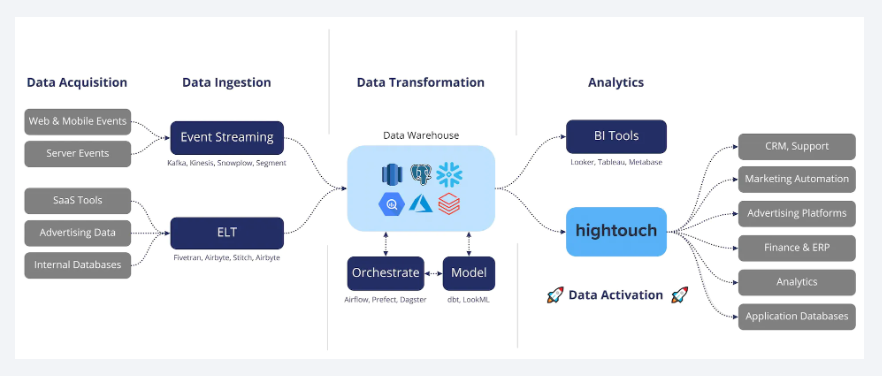
Data Activation is the method of unlocking the knowledge sorted within your data warehouse, and making it actionable by your business users in the end tools that they use every day. In doing so, Data Activation helps bring data people toward the center of the business, directly tying their work to business outcomes.
In recent years though, organizations have begun to notice a common problem: data stored within the warehouse is only accessible to technical users who know how to write SQL, and data living within a dashboard/report is only ever used by key stakeholders and decision-makers at a high-level to power operations.
This shift has given rise to a new line of thinking known as Data Activation which is the final piece of the modern data stack.
What is difference between Reverse ETL and data activation?
Below is the asnswer from ChatGPT:
Reverse ETL is a process that enables data to flow from data warehouses and other data stores into business dashboards and tools, allowing companies to operationalize data in daily activities. ETL, ELT, and reverse ETL are different ways of processing data. Sometimes you'll need to use more than one, depending on your business goals³. If Reverse ETL is data flowing up-river (pun intended), then we can think of data activation as the swelling of the Nile, providing sustenance to an entire geographic region. Data activation is the realization that a SoR can’t possibly manage all of the context and usage of a data entity; nor can it derive potential actions for given scenarios¹. Data activation is the application of the composite insight (s) that is the result of blended, constantly changing contexts. Essentially, Reverse ETL is a point-to-point gap-fill, where data activation democratizes data, and also takes the next step of enabling action¹.
4 best reverse ETL tools
Census
Census is user-friendly for non-technical staff like marketing and customer support teams. They charge based on the number of destinations and/or destination fields, access control features, and service-level agreement terms.
Hightouch
Hightouch enables businesses to sync data from their warehouse with the tools and apps in their tech stack. Hightouch features several no-code and marketer-friendly features like audience creation and activation.
Grouparoo
Grouparoo is an open-source reverse ETL framework, and well suited for developer-driven projects and data-mature companies as it offers a high level of control over data modeling and user segmentation.
Twilio Segment
With Twilio Segment, businesses are able to harness reverse ETL alongside all the capabilities of a complete customer data platform (i.e., real-time identity resolution, a configurable identity graph, profile portability, automated data governance at scale to ensure privacy and compliance). Businesses can then enrich their identity resolved profiles in their data warehouse before syncing them with downstream tools for activation.
References
https://hightouch.com/blog/reverse-etl
https://hightouch.com/blog/what-is-data-activation
1) Reverse ETL Fundamentals: A Comparative Guide - Rudderstack. https://www.rudderstack.com/blog/reverse-etl-fundamentals-a-comparative-guide-to-activating-your-data-pipeline/.
(2) Reverse ETL, ELT, Data Activation: Not Confusing at All Right!? - Rivery. https://rivery.io/blog/reverse-etl-data-activation/.
(3) Reverse ETL: What Is It, How It Works & Recommended Tools - McGaw.io. https://mcgaw.io/blog/reverse-etl-guide/.