The 3-3-3 framework for data governance
To Nha Notes | July 20, 2022, 11:40 a.m.
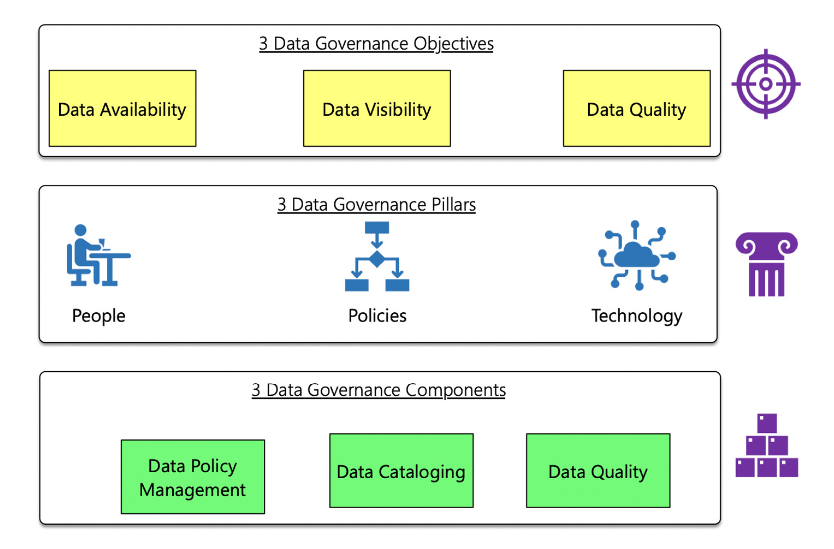
This framework focuses on the following three aspects:
- Objectives
- Pillars
- Components
The three objectives of data governance
- Data Availability: Data availability ensures that a platform is provided to the right stakeholders for finding the correct data on time.
- Data Visibility: Data visibility ensures an intuitive catalog of data assets available across the organization.
- Data Quality: Data quality ensures that the appropriate quality of data is maintained throughout the data life cycle.
The three components of data governance are as follows:
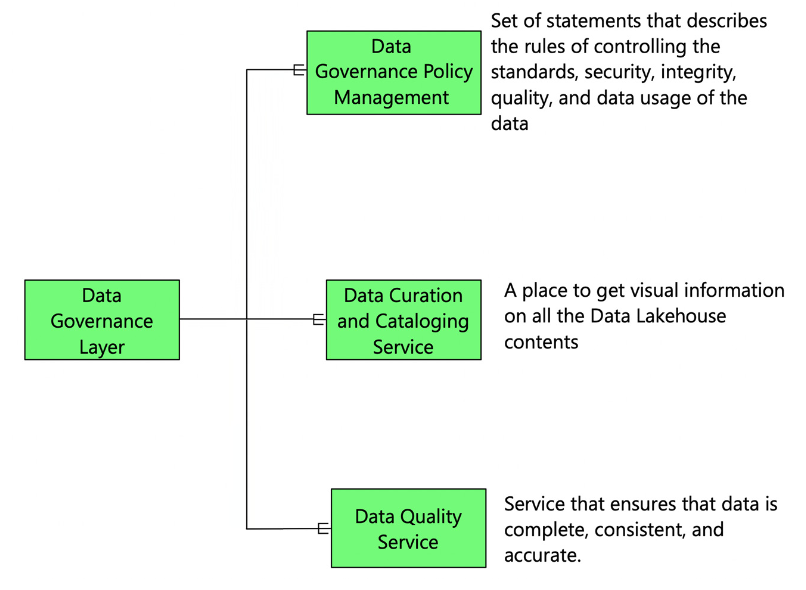
- Data Governance Policy Management: The first component is not a technology component; it is a set of data policies and standards. The data policy is a set of statements describing the rules of controlling the standards, security, integrity, quality, and data usage in the Data Lakehouse.
- Data Curation and Cataloging Service: Data cataloging is the process of organizing an inventory of data so that it can be easily identified. This service ensures that all the source data, the data in the data lake, the data in the data warehouse, the data processing pipelines, and the outputs extracted from the Data Lakehouse are appropriately cataloged.
- Data Quality Service: Any data stored or ingested in the Data Lakehouse must have a data quality score that determines the reliability and usability of the data. There are many parameters on which the quality of data is determined. A few of these parameters include the completeness of data, the consistency of data, and the accuracy of the data. The data quality service ensures that data is complete, consistent, and accurate.
Reading the book Data Lakehouse in Action for more information.