Hosted by the Linux Foundation, Akrites aims to fix open source security vulnerabilities before attackers can exploit them — founding members include Anthropic, Google, OpenAI, and Microsoft.
The developer's guide to connecting CRM data, AI, and app experience at scale
Have you downloaded your copy of our newest eBook yet? Written by Drew Robb and sponsored by Heroku, this brand-new playbook is designed to help you build AI on a data foundation that actually works in production. Learn:
Why the data foundation, not the model, is almost always the deciding factor in AI success.
How to give AI agents access to the unstructured enterprise knowledge that makes up 90% of your organization's information.
How retrieval-augmented generation resolves the accuracy-versus-latency tradeoff that slows most deployments.
WeAreDevelopers is coming to the US to give unsung developers a bigger voice
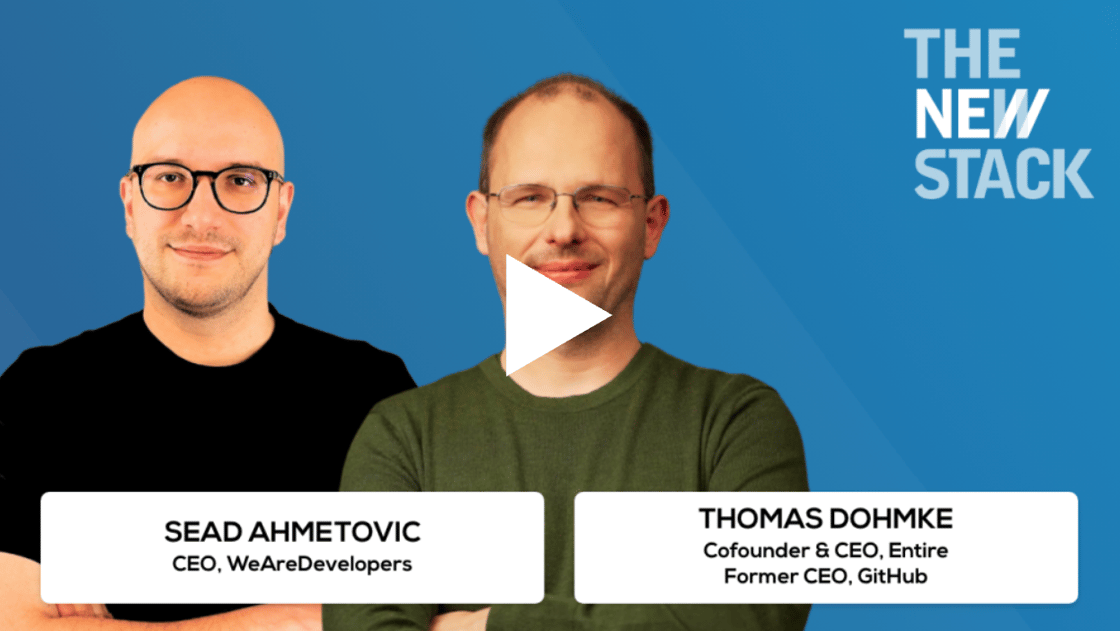
The WeAreDevelopers conference expands to San Jose, California, this September. In this episode, WAD co-founder and CEO Sead Ahmetovic and Entire CEO Thomas Dohmke speak with The New Stack about the future of software development ahead of the event. Tune in to learn more!
OpenSearch vs. the black box: one open-source stack for traditional observability and AI agent evaluation
Logs, metrics, and traces work great — until an AI agent starts hallucinating, overconsuming, or making tool calls you didn’t anticipate. Learn how to monitor traditional services and evaluate AI agent behavior in production using one open-source stack built on OpenSearch and OpenTelemetry.
Log Everything, alert smarter: A SecOps framework for AI-driven detection
SecOps teams are caught in a never-ending alert-fatigue cycle. More detection rules generate more alerts, more alerts overwhelm analysts, and overwhelmed analysts miss the threats that matter. Get a practical framework for SecOps teams working to get control of their signal-to-noise problem with specific guidance on where AI makes the biggest operational difference.
Still managing separate access tools for humans, pipelines, and AI agents?
Most access strategies weren’t designed for non-human identities. Traditional PAM tracks admin sessions, and VPNs grant broad network entry. In this session, we will work through what a unified access architecture actually covers today: human developers, contractors, pipelines, and AI agents, under one consistent policy model, without adding IT overhead or slowing down engineering teams.
From Silos to Governance: Securing IT/OT Data Movement
Find out how organizations managing critical infrastructure are replacing one-off file transfers with governed, resilient data movement at scale. See where IT/OT integration security actually breaks down in practice — and what a modern architecture does differently.
The Kubernetes rightsizing trust gap: Why the stakes just got higher
AI workloads have made the Kubernetes rightsizing trust gap expensive. Learn how teams move from human-approved every change to continuous closed-loop optimization — in practice.
Operationalizing AI in Observability: From Debugging to Automated Remediation
Engineering teams have more data than ever, but humans are still the bottleneck, manually stitching together logs and traces to find answers. Get a practical look at how Datadog’s Bits AI moves teams from manual investigation to autonomous remediation.
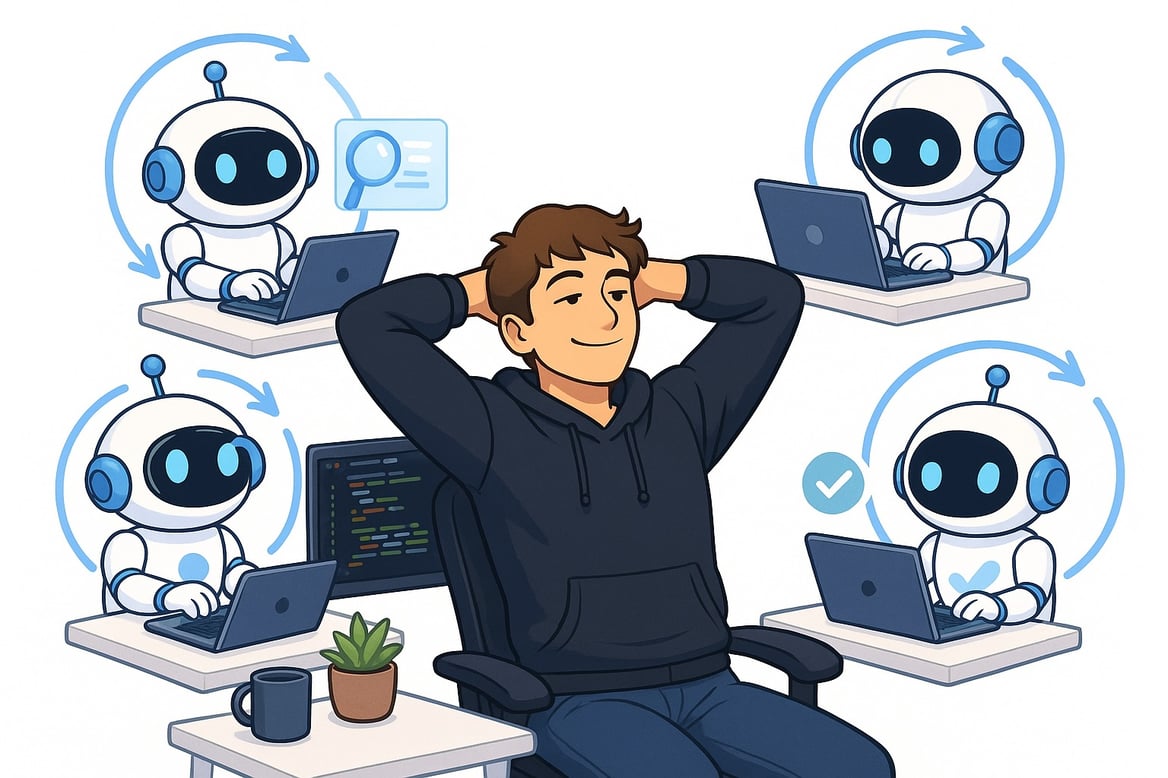
Loops are changing how developers work with coding agents — set a goal, let the agent self-verify, and only come back to you when it's done. Here's what this guide breaks down:
Why self-verifying loops let you run multiple agents in parallel and ship more with less back-and-forth.
The simple command that keeps Claude Code working autonomously until a task is fully complete.
The two-step verification method that dramatically reduces bugs before they hit dev.