"Agentic workflows have fundamentally changed Copilot’s compute demands."
— Joe Binder, VP of product development at GitHub’s parent company, Microsoft. Read more.
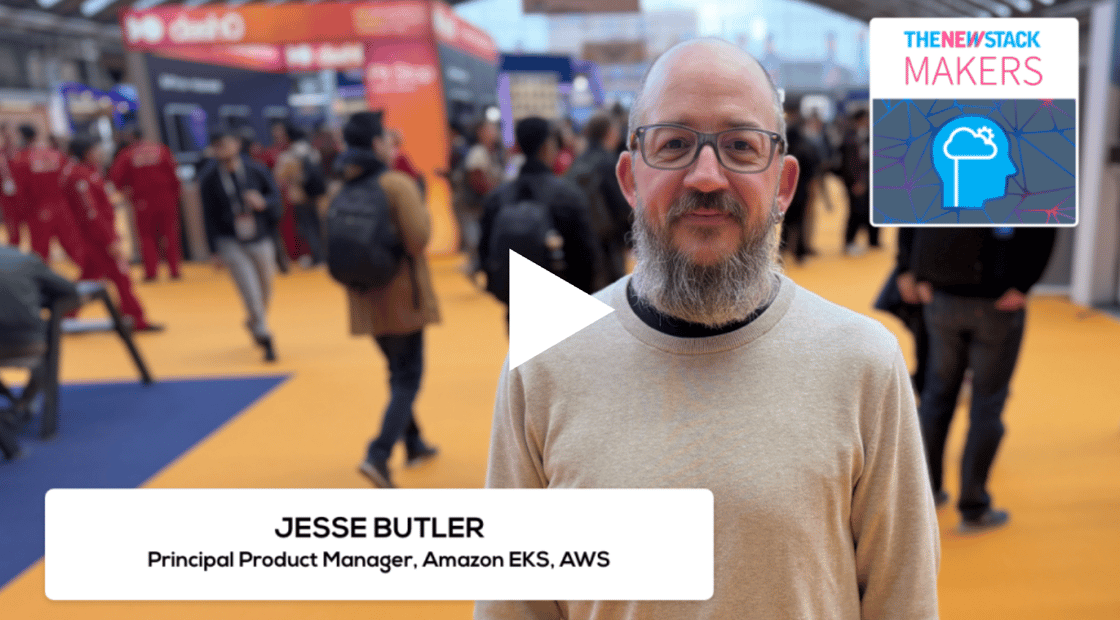
Can you make Kubernetes invisible? Here’s why AWS is on a mission to do it.
For this edition of The New Stack Makers, we sit down with Jesse Butler, principal product manager at AWS Elastic Kubernetes Service. With his involvement in several key Cloud Native Computing Foundation (CNCF) projects, including Karpenter, Kro, and Cedar, Butler explained his vision for more effective cloud-native computing at KubeCon + CloudNativeCon Europe 2026 in Amsterdam.
Agents need streaming that resumes, sessions that persist, and state that survives a reconnect. Most stacks have the back-end handled. The transport layer between the agent and the user is where AI UX breaks. Sponsored
Happy Friday! Our most popular coverage this week focused on the messy reality of AI agent pricing.
Janakiram MSV’s report on how Anthropic, OpenAI, Google, and Microsoft agree that the harness is the product but disagree on the price saw significantly more interest than anything else on the site. While these companies agree that the software layer managing agents is the core product, their billing models are worlds apart. Anthropic is betting on a $ 0.08-per-session-hour model, while OpenAI is shipping its version as open source. This split forces developers to choose between predictable, managed costs and the overhead of running their own infrastructure.
Anthropic is considering removing Claude Code from its cheapest plan. High demand has led Anthropic to pause access for new Pro subscribers while the company rethinks its pricing structures.
Thanks for reading, and we’ll see you next week.
— Nick Lucchesi, editor-in-chief, TNS
Other reads worth your time
3 steps to escaping the “break-fix” trap Break the "break-fix" cycle. Use AI and automation to scale digital operations and stop developer burnout. Read the 3-step guide now.
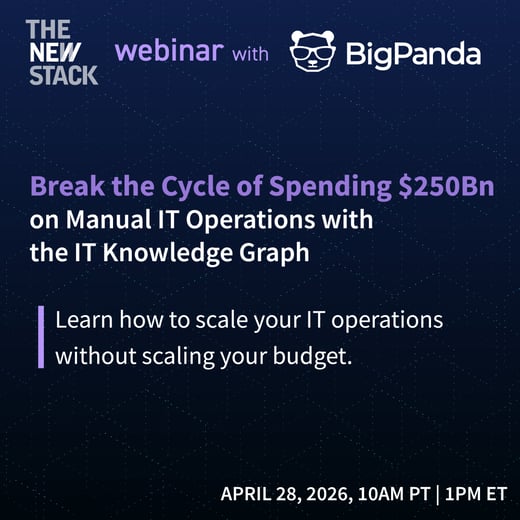
Break the cycle of spending $250bn on manual IT operations April 28
Rules-based automation solves only 20% of IT problems, leaving a $250 billion manual burden. BigPanda’s IT Knowledge Graph fixes this by connecting fragmented data and institutional knowledge, allowing AI to handle the complex reasoning rules cannot. Learn how this shift drives 430% ROI and reduces outages.
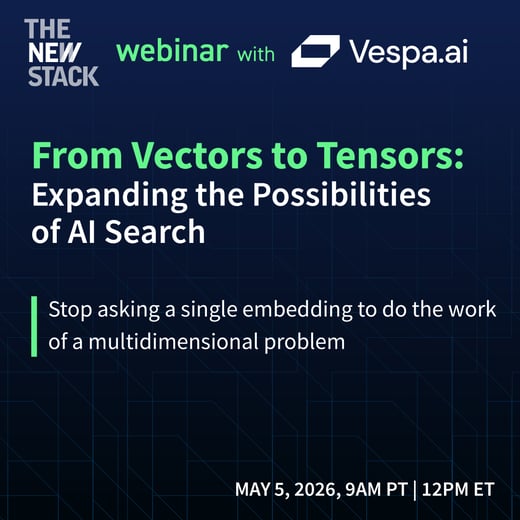
From vectors to tensors: Expanding the possibilities of AI search May 5
Vector embeddings transformed how we build search and retrieval systems, and if you’ve shipped production applications on top of them, you already know what they can do. In this live session, we'll uncover what tensors are, why they matter, and what they make possible in real-world applications.
The next step for continuous delivery: An IDP-driven platform On-Demand
Continuous Delivery solved deployment, but as AI accelerates software delivery, pipelines are still hard for developers to access without tribal knowledge and manual handoffs. Learn how platform teams connect catalog data, environments, and pipelines to reduce friction.
Developer-led observability: Debugging distributed and AI systems On-Demand
This session on integrating observability into everyday workflows is now available to watch on-demand. Explore real-world examples and debugging demonstrations that show how to move faster, escalate less, and build more reliable AI-driven systems from the start.
Our sister site's latest webinar on pipeline modernization is now available on-demand for teams moving beyond legacy batch loads. In this session, Towards Data Science and CData explore how to evolve your workflows to support the real-time data demands of agentic RAG systems and prevent production failures.