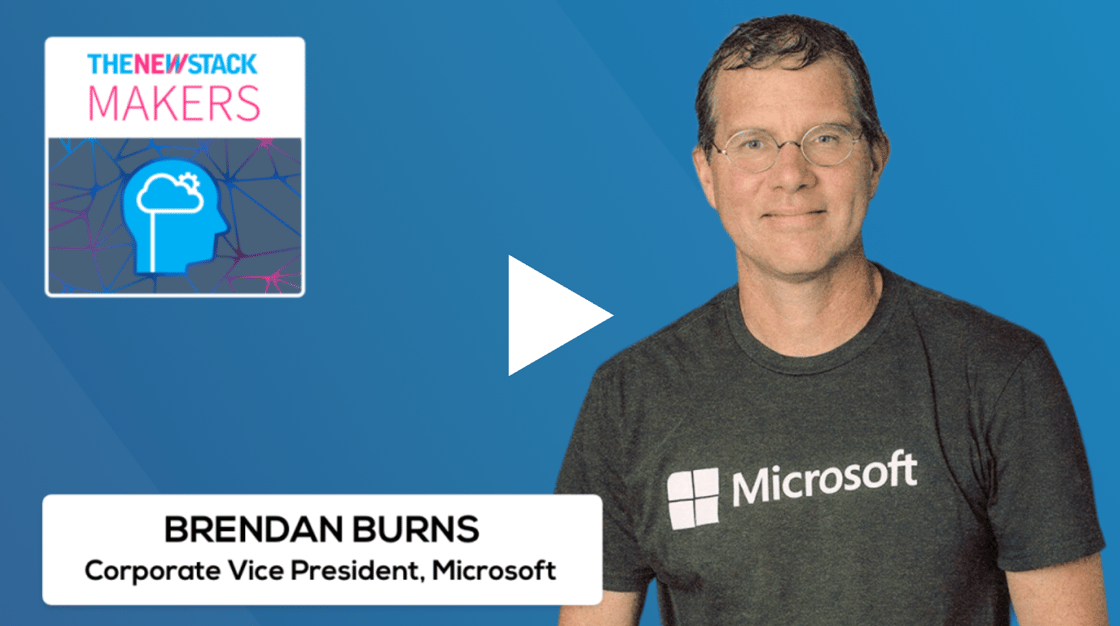
Kubernetes co-founder Brendan Burns: AI-generated code will become as invisible as assembly
For this edition of The New Stack Makers, TNS's Frederic Lardinois sat down with Brendan Burns, one of the co-founders of Kubernetes, to talk about how AI is changing the infrastructure he helped create. Burns argues that as testing frameworks mature, developers will stop reviewing most code and programming languages will evolve to match. Tune in to learn more!
Week in review: Microsoft debuts a clever AI strategy
To ship its latest Copilot features, Microsoft is leaning on both OpenAI and Anthropic, betting that its advantage lies not in AI models but in data. It’s a clever strategy that could pay off for MSFT, and it’s the basis of one of our most-read stories of the week. Did you miss it? Catch up here.
Also, last week we spoke with technologist Kelsey Hightower at KubeCon in Amsterdam about his views on AI, open-source sustainability, and career resilience for engineers. It’s a revealing conversation that is at once candid and cautious. It’s also one of the breeziest tech reads you spin through all week.
And finally, we have a story about how Cursor is enabling companies to run AI coding agents on their own infrastructure, keeping source code and build data in-house to meet security and compliance requirements. If you’re at a Fortune 500 firm — and even if you’re not — this is very interesting news.
WebAssembly adoption hinges on the Component Model. Luke Wagner discusses Preview 3 updates and how Wasm is evolving for edge and serverless environments.
HPE's new agentic AI operations system cuts root cause analysis time in half by using skills-based AI agents that work alongside human operators, not replace them.
Scaling Kubernetes with systemic certainty, not operational heroics April 9
As Kubernetes scales, manual patching and infrastructure drift often become bottlenecks that stall your roadmap and create compliance risks. Join us live to learn how to move beyond a coping-based strategy and adopt an API-driven foundation that scales without increasing your headcount.
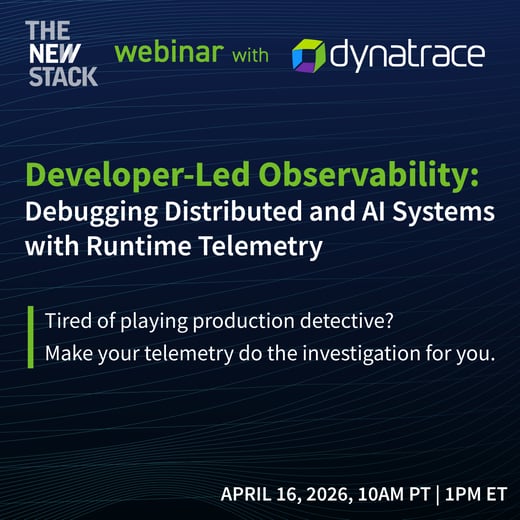
Developer-led observability: Debugging distributed and AI systems with runtime telemetry April 16
Join us on April 16 for a live session on integrating observability into everyday workflows. You’ll see real-world examples and live debugging demonstrations that show how to move faster, escalate less, and build more reliable AI-driven systems from the start.
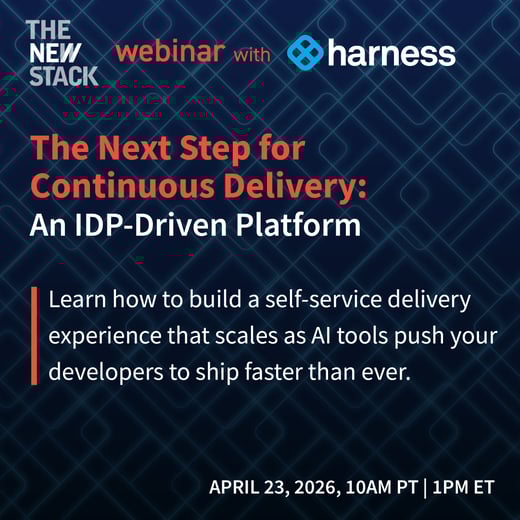
The next step for continuous delivery: An IDP-driven platform April 23
Continuous Delivery solved deployment, but as AI accelerates software delivery, pipelines are still hard for developers to access without tribal knowledge and manual handoffs. Learn how platform teams connect catalog data, environments, and pipelines to reduce friction and keep delivery consistent.
Building production-ready agentic AI — why a Control Plane matters On-demand
Generative models alone aren’t enough for production-grade AI. Without a unifying control plane, scaling autonomous agents often leads to hallucinations, cascading errors, and unpredictable system behavior. Catch the replay for a deep dive into the missing piece in the AI stack: the Control Plane.
From batch to real-time: what it actually takes to modernize your data pipelines
In this session, Kim Fessel joins Jess Ramos of Big Data Energy and Manish Patel, GM of Data Integration at CData, to talk through what pipeline modernization actually looks like in practice. Learn when CDC is the right move versus when it's overkill, how to approach hybrid environments where legacy and cloud systems need to coexist, and what separates teams that modernize incrementally from those that get stuck in planning mode.